
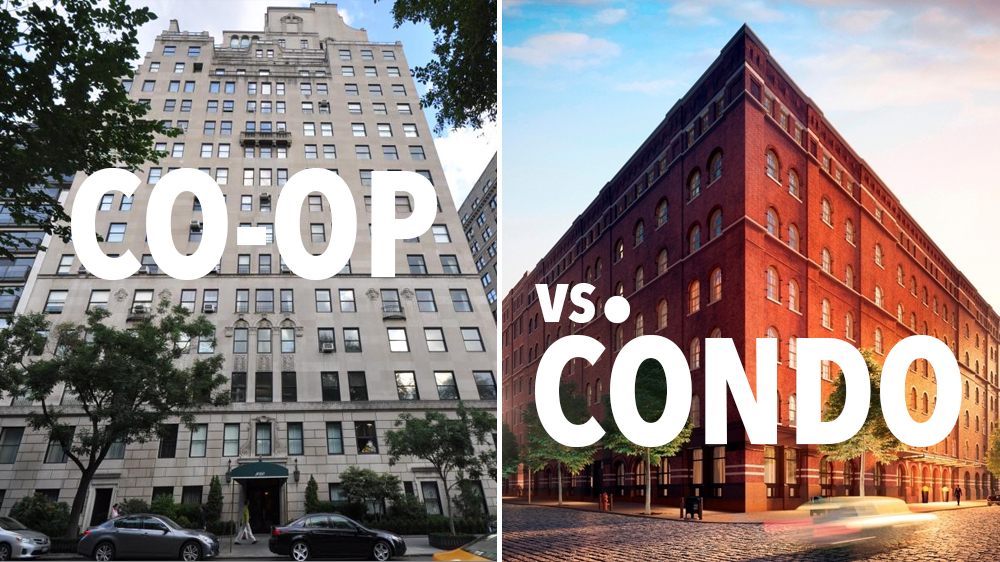
Co-op vs. Condo in Westchester County: What’s the Difference?
When you're searching for a home in Westchester County, whether in White Plains, Yonkers, New Rochelle, Mount Kisco, or Rye, you’ll find two dominant forms of ownership: co-operatives (co-ops) and condominiums (condos). Understanding how they differ is key to choosing the right home for your lifestyle, financial goals, and long-term plans.
If you’re new to this region’s real estate market, here’s a friendly, clear breakdown to guide you.
1. What You Actually Own
Co-op
-
When you buy a co-op, you aren’t buying real property, you’re purchasing shares in a corporation that owns the entire building or complex.
-
Your ownership comes with a proprietary lease that gives you the right to occupy a specific unit.
-
Think of it as “owning a slice of the building” rather than owning the unit itself.
Condo
-
Buying a condo means you own real property, the unit itself, directly.
-
You also share ownership of common areas (like lobbies or grounds) through a condo association.
-
It’s the most traditional form of real estate ownership.
Bottom line: Condo = deed to your unit; Co-op = shares and a lease.
2. Pricing & Monthly Costs
Co-ops
-
Often less expensive upfront than condos in Westchester.
-
Monthly maintenance includes common costs plus your share of:
-
Building mortgage (if any)
-
Property taxes (passed through as part of maintenance)
-
Staff, utilities in some buildings, repairs
-
-
Typically higher monthly fees than condos.
Condos
-
Usually higher purchase price.
-
Monthly common charges cover maintenance of shared areas.
-
You pay your own property taxes separately.
Example: A co-op in Yonkers might have a lower price tag but higher monthly fees compared with a similarly sized condo in Scarsdale.
3. Board Approval & Rules
Co-ops
-
Co-op boards are known for stringent application processes.
-
Expect:
-
Detailed financial disclosures
-
Background checks
-
Interviews
-
References
-
-
Some co-ops have pet restrictions, sublet limits, or other behavioral rules.
Condos
-
Condos have associations, but the approval process is more relaxed.
-
Subletting is often easier.
-
Fewer restrictions on pets or renovations (though rules still apply).
Tip: If flexibility matters to you (e.g., renting out your unit), condos are often easier.
4. Financing Differences
Co-ops
-
Lending criteria can be stricter.
-
Many co-ops require larger down payments (20–30% or more).
-
Underwriters may look closely at:
-
Board financials
-
Your personal finances
-
Condos
-
Easier to finance with standard mortgage products.
-
Lenders tend to view condos as more “normal” property with resale stability.
5. Resale & Investment Potential
Co-ops
-
Historically strong for long-term occupants.
-
Not always the best for investment rental properties due to restrictions.
Condos
-
Typically have broader resale appeal and more flexible use cases.
-
Better for buyers thinking of:
-
Renting units
-
Selling in a shorter timeframe
-
If future flexibility is important, condos may hold more long-term value.
6. Maintenance & Upkeep
Co-op
-
Building maintenance is covered by the co-op’s operating budget and your shared fees.
-
You might have fewer out-of-pocket surprises.
Condo
-
You manage inside your unit.
-
The association handles shared structures, but you pay individually for:
-
Interior repairs
-
Appliances
-
HVAC systems
-
What This Means in Westchester County
Westchester has a diverse real estate landscape — from urbanized areas like Yonkers & White Plains to suburban communities like Hastings-on-Hudson, Chappaqua, and Larchmont.
In the more urban or transit-oriented parts of the county, co-ops can provide a cost-effective entry point into the market. In sought-after suburbs where buyers want longer-term ownership or rental flexibility, condos are increasingly popular.
Final Takeaway
Here’s a quick summary:
| Feature | Co-op | Condo |
|---|---|---|
| Ownership | Shares + lease | Fee simple deed |
| Price | Lower purchase price, higher fees | Higher price, lower fees |
| Financing | Stricter | Easier |
| Board Approval | Rigorous | Simpler |
| Rent/Sublet | Often restricted | More flexible |
| Investment | Less ideal | Stronger potential |
Thinking of Buying in Westchester?
Before you decide:
✔ Get familiar with co-op board requirements
✔ Compare maintenance vs. common charges
✔ Talk to a local real estate agent and mortgage lender
Every community and building has its own culture and rules, so your perfect home depends on the lifestyle you want.
Call me at 646-421-4467 to get started on your search.
